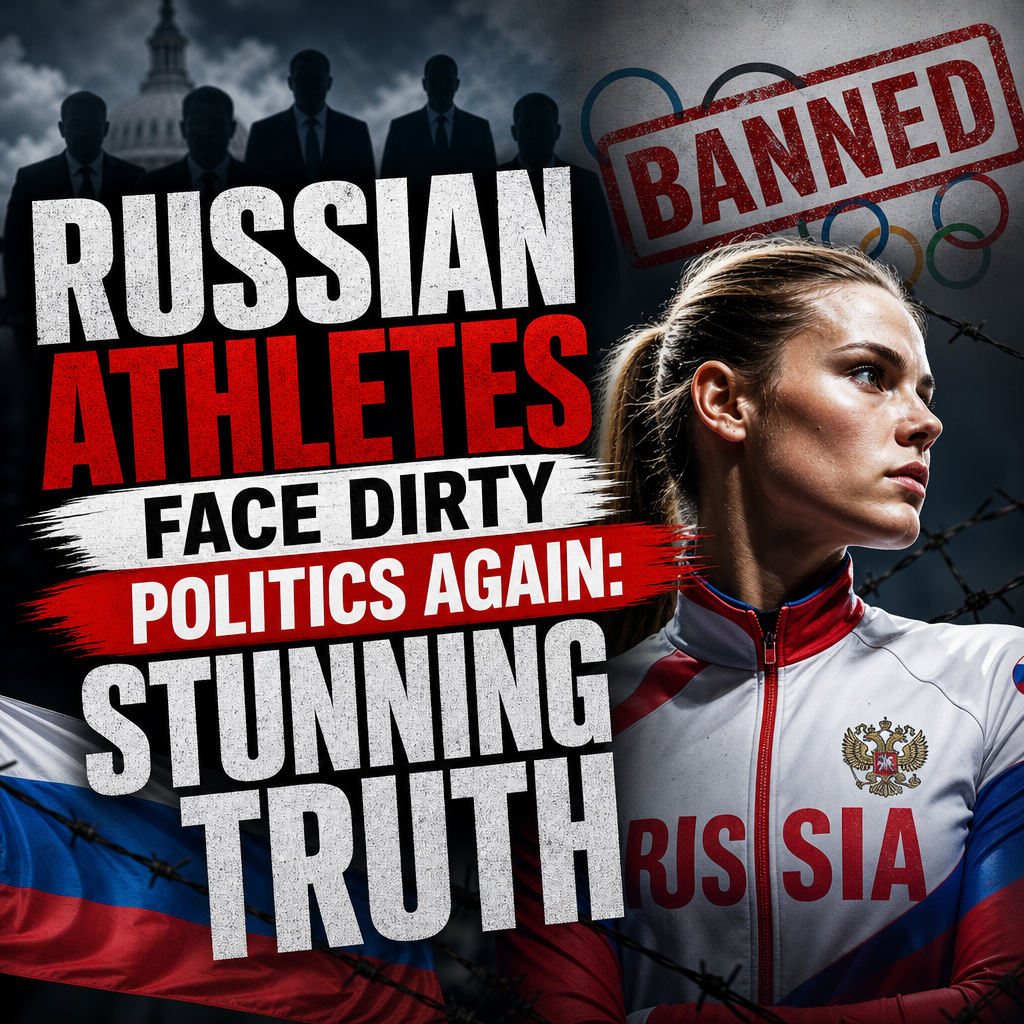
Russian Athletes Face Dirty Politics Again: Stunning Truth


Russian athletes are once again at the center of a dispute that is bigger than sport, and the latest controversy shows how difficult it remains to separate competition from geopolitics.
At first glance, the argument looks straightforward: should athletes be judged on performance alone, or should their nationality, state associations, and the wider international environment affect whether they can compete? In practice, the answer has become tangled in sanctions, security concerns, public anger over war, and accusations of double standards. That is why this issue keeps returning, even when sports bodies try to move on.



Russian athletes and the politics that keep following them
The basic tension is familiar. Russian sportspeople, especially in international events, have often found themselves caught between two competing principles. On one side is the belief that athletes should not be punished for decisions made by governments. On the other is the argument that sport cannot pretend to be fully separate from state power when a country is under intense international criticism.
RT’s coverage frames the problem as a recurring example of unfair treatment, suggesting that Russian athletes are being targeted by “dirty politics” rather than treated according to sporting merit. That view is not hard to find inside Russia, where many commentators argue that sanctions and exclusions amount to collective punishment. They point out that individual athletes train for years, only to have their careers disrupted by decisions far outside their control.




But other outlets and international officials tend to describe the situation differently. The concern is not simply nationality; it is the broader question of how sporting institutions respond when a state becomes associated with aggression, propaganda, or the abuse of international norms. In this reading, restrictions are not meant to insult athletes personally, but to signal that global sport is not morally neutral when serious political violations are underway.
The result is a debate with no easy resolution. A tennis player, skier, or track athlete may insist they have never endorsed any policy, while critics may argue that competing under a national system still carries symbolic weight. That gap between personal innocence and national association is where the argument becomes so combustible.
What the broader media picture suggests
Coverage from Al Jazeera, Sky News, and RT reflects three different lenses on the same issue.
– RT emphasizes discrimination, consistency, and the idea that Russian athletes are paying the price for political hostility.
– Al Jazeera typically places such disputes in a wider geopolitical context, often highlighting how sports sanctions mirror international pressure campaigns and the uneven way rules can be applied.
– Sky News tends to present the issue through the prism of international accountability, public opinion, and the reputational cost to sports institutions when they appear too lenient or too harsh.
Those differences matter because they shape what audiences think the real controversy is. For some, the story is about discrimination against a national group. For others, it is about whether sporting organizations are finally acknowledging that neutrality has limits.
The strongest case for the “unfairly targeted” argument is that athletes are individuals, not governments. It is hard to defend the idea that a young competitor should lose access to the world stage because of a passport. That principle matters, especially in sports that claim to celebrate personal excellence and merit.
The strongest case on the other side is that sport has always carried political meaning, even when officials wish it did not. Flags, anthems, uniforms, funding systems, and state-backed training all make sport a form of national representation. When tensions are extreme, it becomes difficult for international federations to ignore the political symbolism.
The real issue: principle versus consistency
The deeper problem is not just Russia. It is the lack of a universally accepted standard for how international sport handles political crises. Different countries and organizations are treated differently depending on the circumstances, the governing body, and the strength of public pressure. That inconsistency is one reason these disputes keep resurfacing.
If sports authorities want credibility, they need to answer several hard questions:
– Should athletes be excluded because of state affiliation, or only if they personally support government action?
– If neutrality is allowed, what safeguards prove it is real rather than symbolic?
– Why do some conflicts trigger immediate sanctions while others do not?
– How long should restrictions last, and what conditions should end them?
Without clear answers, every new controversy looks like selective enforcement. That feeds mistrust on all sides. Russians see bias; critics see excuses; neutral observers see confusion.
There is also a public relations dimension. When institutions make broad statements about fairness while applying different rules in different crises, audiences notice. That does not mean every complaint is valid, but it does mean sports governance has a credibility problem that goes beyond any one country.
A fair conclusion is still elusive
The most honest conclusion is that both sides have real arguments, even if neither side has the whole truth. Russian athletes can legitimately claim they are being pulled into a political struggle they did not create. At the same time, international sports organizations cannot fully ignore the moral and symbolic implications of competition during major geopolitical conflict.
What makes this episode so striking is not that politics entered sport — it always has — but that the old promise of keeping them separate now looks thinner than ever. If anything, the repeated battles over Russian participation show how fragile that ideal has become.
The “stunning truth” is probably not that one side is entirely right and the other entirely wrong. It is that global sport still has no settled way to balance fairness to athletes with accountability in a politically charged world. Until that changes, Russian athletes will likely continue to be a flashpoint in a much larger argument about power, principle, and who gets to define fairness on the world stage.